
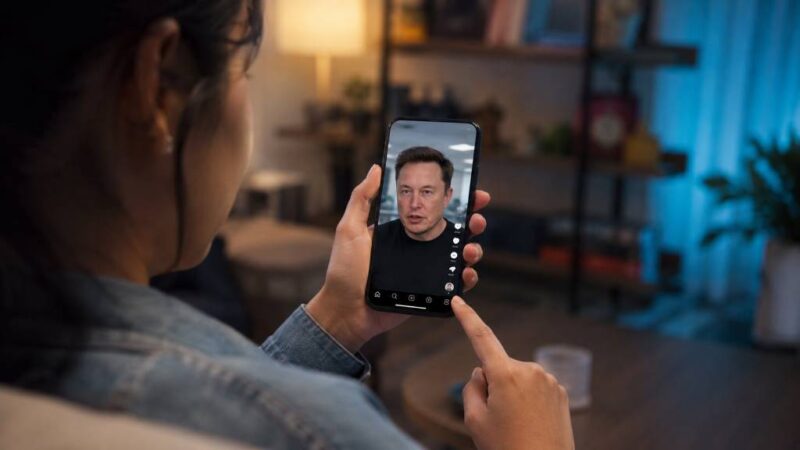
Deepfake videos are spreading faster than ever, and most people cannot tell the difference between real and fake. According to recent studies, deepfake content on social media has grown by over 900% in recent years, with more than 500,000 deepfake videos circulating online. Knowing how to spot a deepfake video on social media is no longer optional; it is a critical digital literacy skill. Misinformation powered by AI-generated videos has already influenced elections, damaged reputations, and caused widespread public panic. This guide gives you the practical tools to fight back.
Why Deepfakes Are More Dangerous Than Ever
Artificial intelligence has made deepfake creation disturbingly accessible to anyone with a laptop. Tools that once required Hollywood-level budgets now cost nothing and take minutes to use. As a result, bad actors, scammers, and political operatives are flooding social platforms with synthetic media. Understanding the threat is the first step toward protecting yourself and others around you.
The Technology Behind Deepfakes
Deepfakes use a type of AI called a Generative Adversarial Network, or GAN, to swap faces or clone voices. The system trains on real footage of a person and then generates new, fake footage that looks convincingly real. Modern deepfake tools can even mimic breathing patterns and micro-expressions. This level of sophistication means that your eyes alone are often not enough to catch the fake.
Who Are the Most Common Targets?
Politicians, celebrities, and business executives are the most frequent targets of deepfake attacks. However, everyday people are increasingly targeted through “revenge deepfakes” or financial scam videos. Social media platforms like TikTok, Instagram, YouTube, and Facebook are the primary distribution channels. Knowing who gets targeted helps you apply extra scrutiny when you encounter certain types of content.
How to Spot a Deepfake Video on Social Media: Key Visual Clues
Training your eye to catch visual inconsistencies is one of the most reliable ways to identify synthetic media. While AI is improving fast, it still struggles to perfectly replicate certain human features. Therefore, knowing exactly where to look gives you a significant advantage. The following clues are your first line of defense.
Watch the Eyes and Blinking Patterns
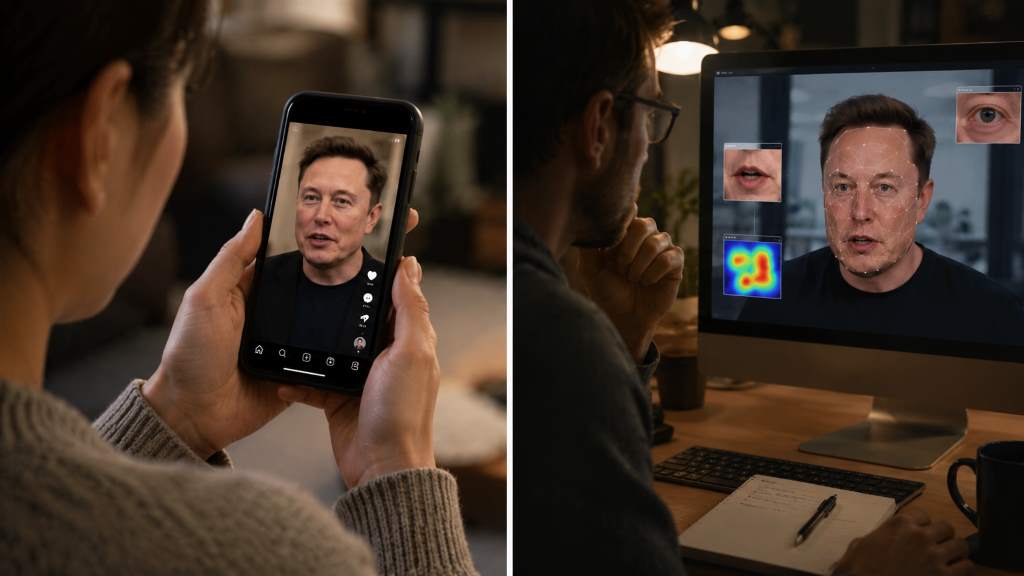
Unnatural blinking is one of the oldest and still most reliable deepfake tells. Early deepfake models rarely blinked at all, but modern ones sometimes blink too fast or too slowly. Look closely at the eyes for an unnatural glassy or waxy appearance. Additionally, the whites of the eyes sometimes show inconsistent lighting compared to the rest of the face.
Check the Facial Edges and Hairline
The border where the face meets the hair or neck is extremely difficult for AI to render perfectly. You will often notice a subtle blurring, flickering, or warping effect along the jawline and hairline. Sometimes the skin tone changes slightly where the synthetic face meets the original neck. Pausing the video and zooming in on these edges reveals flaws that are invisible at normal speed.
Look at the Teeth, Ears, and Jewelry
AI consistently struggles to generate realistic teeth, especially when the subject is speaking. Teeth may appear blurred, perfectly uniform, or slightly misshapen in ways real teeth never are. Earrings, glasses, and other accessories often flicker or distort near the face. These small details are easy to overlook but are powerful indicators of manipulation.
Analyze Lip Sync and Mouth Movement
Poor lip synchronization remains a classic deepfake warning sign. The mouth movements may lag slightly behind the audio or not match the words being spoken at all. Furthermore, the area around the mouth sometimes loses texture and looks smoother than the rest of the face. Watching with the sound on and then off helps you isolate these discrepancies more effectively.
Audio Clues That Reveal a Deepfake
Visual inspection is important, but audio analysis is equally powerful. AI voice cloning technology has improved, yet it still leaves behind detectable traces. Combining audio and visual scrutiny together gives you a much stronger ability to catch manipulated content. Here is what to listen for carefully.
Flat or Robotic Voice Tone
Cloned voices often lack natural emotional variation throughout speech. The pitch may sound slightly mechanical or stay at an unusually consistent tone even during emotional statements. Background noise can also sound artificially clean or mismatched with the environment shown in the video. A real speaker’s voice naturally modulates; a cloned one often sounds slightly “off” in ways you can feel but struggle to describe.
Inconsistent Breathing and Pauses
Humans breathe naturally between sentences, and this creates subtle audio patterns. Deepfake audio frequently skips these natural breathing sounds or places them in unnatural positions. Unusual silent gaps or abrupt transitions between words also signal that the audio was stitched together artificially. Listening with headphones makes these audio artifacts significantly easier to detect.
Technical Tools to Help You Spot a Deepfake Video on Social Media
Beyond your own senses, several free and paid tools now exist to help verify video authenticity. These tools use AI to fight AI, analyzing metadata and pixel patterns invisible to the human eye. Combining manual inspection with technical tools gives you the strongest possible defense. Here are the most useful options available right now.
AI-Powered Detection Platforms
- Microsoft Video Authenticator analyzes videos and images for manipulation signs and provides a confidence score.
- Deepware Scanner is a free tool specifically built for scanning deepfake videos uploaded from social media.
- Hive Moderation offers API-based deepfake detection used by major platforms and researchers.
- Intel’s FakeCatcher detects deepfakes by analyzing blood flow patterns in pixels, achieving up to 96% accuracy.
- Sensity AI monitors and detects deepfake content at scale, often used by journalists and enterprises.
Reverse Image and Video Search
Running a suspicious thumbnail through Google Reverse Image Search often reveals whether the footage was taken from an older, unrelated source. Tools like InVID or WeVerify let you break a video into frames and search each one independently. This technique is especially useful for catching repurposed footage that has been relabeled with false context. Many viral “deepfakes” are actually older real videos misrepresented with new captions.
Platform-Specific Red Flags on Social Media
Each social media platform has its own patterns for how deepfake content spreads. Recognizing these platform-specific behaviors adds another layer of protection to your detection toolkit. Furthermore, understanding the distribution tactics helps you avoid sharing harmful content accidentally. Here is what to watch for on each major platform.
Red Flags on TikTok and Instagram Reels
Short-form video platforms are hotbeds for deepfake distribution because content spreads before fact-checkers can respond. Watch for videos that appear suddenly with no prior history on the creator’s account. Suspiciously high view counts on brand-new accounts are a strong warning sign. Also, look for comment sections that have been disabled or heavily filtered, which creators sometimes use to suppress skepticism.
Red Flags on Facebook and YouTube
Longer deepfake videos on these platforms often impersonate news anchors or trusted public figures to gain credibility. Check whether the channel or page has a verified badge and a long, consistent posting history. Look for slight mismatches between the video thumbnail and the actual content inside. Additionally, descriptions that discourage sharing the video outside the platform should raise immediate suspicion.
How to Verify Before You Share
Sharing a deepfake video makes you part of the problem, even if you do so innocently. Fortunately, a simple pre-sharing checklist takes less than two minutes and protects your credibility. Developing this habit protects both you and your entire social network. Always pause before hitting the share button on emotionally charged video content.
A Quick Pre-Share Verification Checklist
- Search the person’s name plus the topic on a trusted news site before sharing.
- Check if multiple verified outlets are reporting the same event shown in the video.
- Use at least one detection tool from the list above on any suspicious video.
- Ask yourself whether the video seems designed to provoke extreme emotion, as manipulation often does.
- Look up the original source account and check its age, followers, and posting history.
Teaching Others How to Spot a Deepfake Video on Social Media
Digital literacy is a community effort, and one informed person can protect an entire network of friends and family. Sharing these detection skills with older relatives is particularly important since they are statistically more likely to believe and share manipulated media. Schools and workplaces are also beginning to integrate deepfake awareness into their media literacy programs. The more widely these skills spread, the harder it becomes for bad actors to succeed.
Conclusion
The rise of AI-generated media means that seeing something on social media no longer guarantees it is real. However, by combining visual inspection, audio analysis, and free detection tools, you can dramatically reduce your chances of being deceived. Learning how to spot a deepfake video on social media is one of the most valuable skills you can develop in today’s digital landscape. Start applying these techniques today, share this guide with someone you care about, and help build a more informed, scam-resistant online community. Your critical eye is the best weapon against synthetic deception.
Frequently Asked Questions
Can deepfakes be 100% detected by AI tools?
No detection tool is perfectly accurate yet, which is why combining AI tools with manual inspection gives you the most reliable results.
Are deepfake videos illegal in the United States?
Several U.S. states have passed laws criminalizing malicious deepfakes, especially those used for election interference or non-consensual intimate imagery.
How fast can someone create a deepfake video today?
With modern AI tools, a convincing deepfake video can be created in as little as a few minutes using just a handful of source images.
Do social media platforms remove deepfake content?
Major platforms like Meta, YouTube, and TikTok have policies against harmful deepfakes, but enforcement is inconsistent and removal is often slow.
Is it safe to use free deepfake detection tools online?
Most reputable free tools like Deepware Scanner are safe to use, but always avoid uploading sensitive or private videos to unknown third-party websites.

Leave a Reply