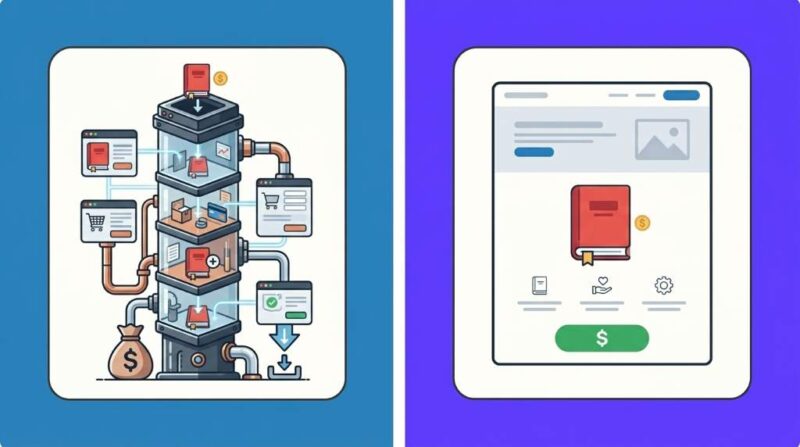
If you sell short ebooks online, picking the right platform can make or break your revenue. Studies show that the global ebook market is projected to surpass $18 billion by 2027, and creators who use optimized sales funnels convert up to 3x more visitors than those using basic landing pages. So when it comes to clickfunnels vs leadpages for selling short ebooks, the decision deserves serious attention. Both tools promise to help you sell more, but they work in very different ways. This guide breaks down exactly which platform suits your ebook business best.
What Is ClickFunnels and How Does It Work?
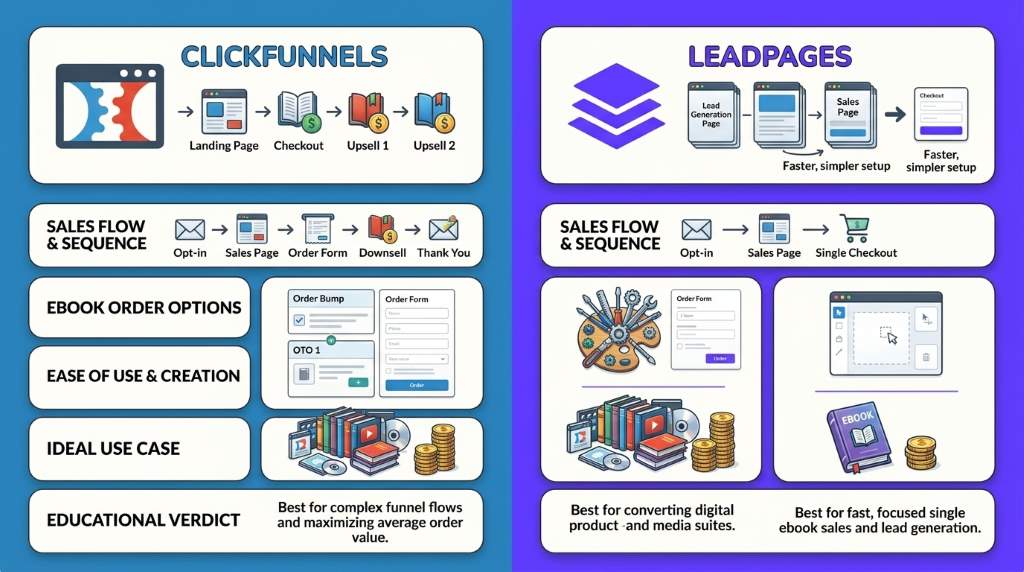
ClickFunnels is a complete sales funnel builder designed to guide visitors through a step-by-step buying journey. It lets you build opt-in pages, sales pages, order forms, upsell pages, and thank-you pages all inside one system. Because of this, creators use it to build multi-step funnels that maximize every visitor’s value. The platform also includes built-in email automation, membership areas, and affiliate management tools.
Core Features of ClickFunnels
- Drag-and-drop funnel builder with pre-built templates
- One-click upsells and order bumps
- Built-in checkout and payment processing
- A/B split testing for funnel pages
- Email follow-up sequences and automation
- Affiliate program management
ClickFunnels works especially well for sellers who want to bundle their short ebook with upsells like a video course, coaching call, or a premium edition. The platform builds an entire ecosystem around a single product. Consequently, your average order value can grow significantly beyond the base ebook price.
What Is Leadpages and How Does It Work?
Leadpages is a landing page builder focused on helping you create high-converting single pages quickly. It offers a clean drag-and-drop editor, dozens of templates, and solid integrations with third-party tools. Unlike ClickFunnels, Leadpages does not include a native checkout system or multi-step funnel builder out of the box. Instead, it connects with payment tools like Stripe and email platforms like Mailchimp or ConvertKit.
Core Features of Leadpages
- Fast drag-and-drop landing page editor
- Pop-ups, alert bars, and opt-in forms
- Built-in conversion coaching and AI tools
- A/B testing on landing pages
- Integration with 40+ marketing apps
- Leadmeter real-time conversion score
Leadpages shines when you need a polished, professional-looking sales page without the complexity of a full funnel. It is also more affordable, making it an attractive option for first-time ebook sellers. However, it requires you to rely on outside tools for email marketing, payment processing, and upsell delivery.
ClickFunnels vs Leadpages for Selling Short Ebooks: Key Differences
Understanding the real differences between these platforms helps you avoid paying for features you do not need. Both tools build landing pages, but their depth and purpose differ significantly. The right choice depends on your sales strategy, budget, and technical comfort level. Let us compare them across the factors that matter most for ebook sellers.
Ease of Use
Leadpages wins on ease of use for most beginners. Its editor is clean, intuitive, and you can launch a simple ebook sales page in under an hour. ClickFunnels has a steeper learning curve because it manages multiple funnel steps at once. That said, ClickFunnels provides strong onboarding resources and pre-built funnel templates to help new users get started faster.
Sales Funnel Capability
ClickFunnels is the clear winner here. It lets you build a complete sales flow that takes a visitor from a free lead magnet to a paid ebook purchase to a higher-ticket upsell. For short ebook sellers who also offer bundles, workbooks, or companion courses, this is a major advantage. Leadpages, on the other hand, handles the top of the funnel well but requires external tools for checkout and follow-up sequences.
Pricing Comparison
Pricing is one of the biggest factors when choosing between these platforms. Here is a current comparison:
| Feature | ClickFunnels | Leadpages |
|---|---|---|
| Starting Price | $97/month | $49/month |
| A/B Testing | Yes | Yes |
| Built-in Checkout | Yes | Limited |
| Upsells | Yes | No |
| Email Automation | Yes (basic) | No (integrations only) |
| Free Trial | 14 days | 14 days |
Leadpages costs significantly less, which matters if you are just starting out and selling a $7 to $27 ebook. ClickFunnels costs more, but it replaces several other tools you might otherwise pay for separately.
Templates and Design
Both platforms offer professionally designed templates, but they serve different purposes. Leadpages focuses on beautiful, conversion-optimized single-page designs that look great on any device. ClickFunnels provides funnel-specific templates that include matching pages for opt-ins, sales, checkout, and upsells. For a quick and attractive ebook sales page, Leadpages templates are slightly easier to customize.
Payment and Delivery Integration
For selling short ebooks directly, payment integration is critical. ClickFunnels includes its own checkout system with Stripe and PayPal built in, plus order bump and upsell features. Leadpages connects with Stripe but does not manage the full transaction natively. You will also need a tool like SendOwl, Gumroad, or Payhip to handle digital file delivery if you use Leadpages.
When Should You Choose ClickFunnels for Ebook Sales?
ClickFunnels makes the most sense when your ebook is part of a larger product ecosystem. If you plan to upsell a course, a workbook bundle, or a coaching package after the initial ebook purchase, ClickFunnels handles that entire journey natively. It also works well when you run paid advertising campaigns and want to maximize return on ad spend through order bumps and one-click upsells. Additionally, sellers who want everything in one dashboard without managing five separate tools will find ClickFunnels worth the higher monthly cost.
Best for:
- Sellers offering ebook bundles or upsell sequences
- Creators running Facebook or Google Ads to cold traffic
- Authors building a full digital product business
- Anyone wanting email, checkout, and funnel in one place
When Should You Choose Leadpages for Ebook Sales?
Leadpages is the smarter choice when your goal is to get a professional ebook sales page live fast without overpaying for features you do not need yet. It works especially well for creators who already use tools like ConvertKit for email marketing and Gumroad for digital delivery. Because it integrates easily with these services, Leadpages fits neatly into an existing tool stack. Budget-conscious creators selling their first ebook at a lower price point will also appreciate the savings.
Best for:
- First-time ebook sellers on a tight budget
- Creators who already use email and payment tools they love
- Authors focused on building an email list with a free ebook lead magnet
- Anyone who wants a fast, clean, and simple setup
Selling a $17 Short Ebook
Imagine you write a short ebook on productivity for remote workers and price it at $17. With Leadpages, you create a clean sales page, connect Stripe, and deliver the file through Gumroad. Your total monthly tool cost is roughly $49 to $79 depending on your other subscriptions. With ClickFunnels, you build a full funnel that offers the $17 ebook, then immediately presents a $37 order bump for a companion workbook, and finally offers a $97 mini-course upsell. Even with the higher platform cost, the funnel can generate two to three times more revenue per visitor.
Both approaches work, but they serve different business stages. Choosing between clickfunnels vs leadpages for selling short ebooks comes down to where you are in your business right now and where you want to be in six months.
SEO and Traffic Considerations
Neither platform handles SEO for your ebook business in a comprehensive way, but both offer some page-level optimization. Leadpages allows you to customize meta titles, descriptions, and URLs easily. ClickFunnels also supports basic SEO settings per page. However, neither tool is a substitute for a proper blog or content strategy if you want organic traffic. For most short ebook sellers, paid ads or social media traffic will drive results faster than SEO on these platforms alone.
Conclusion
When comparing clickfunnels vs leadpages for selling short ebooks, there is no single correct answer. Choose Leadpages if you want an affordable, clean, and easy setup that gets your ebook page live quickly without complexity. Choose ClickFunnels if you want to maximize revenue per visitor through upsells, order bumps, and a complete funnel experience. Both platforms offer free trials, so you can test your choice before committing. Start with the tool that matches your current business size, then scale up as your ebook income grows. Take action today by signing up for a free trial on whichever platform fits your goals.
Frequently Asked Questions
Can I sell ebooks directly through Leadpages?
Leadpages does not handle ebook delivery natively, so you need to connect it with a payment and delivery tool like Gumroad or SendOwl.
Is ClickFunnels worth the cost for a single ebook?
ClickFunnels is worth it if you plan to add upsells or bundle products, but Leadpages is more cost-effective for selling just one ebook.
Which platform converts better for digital products?
ClickFunnels typically converts better for digital products because its multi-step funnel structure guides buyers through a complete purchasing journey.
Does Leadpages support email marketing for ebook promotions?
Leadpages does not have built-in email marketing, but it integrates smoothly with ConvertKit, Mailchimp, and ActiveCampaign for ebook follow-up sequences.
Can beginners use ClickFunnels without technical experience?
Yes, beginners can use ClickFunnels using its pre-built funnel templates and onboarding resources, though it requires more learning time than Leadpages.