

You can boost website traffic organically without spending any money. It takes time, consistency, and the right tactics. This guide breaks down exactly what works right now for tech sites and blogs.
Most guides on this topic repeat the same advice: write good content, use keywords, get backlinks. That advice isn’t wrong. But it’s incomplete. This article goes deeper. It covers the technical, structural, and community-driven tactics that most articles skip.
You’ll find practical steps below. Each one costs nothing but your time and effort. Let’s get into it.
Publish Content That Answers Real Questions

Search engines reward content that solves a specific problem. Start by finding the exact questions your audience types into Google.
Find Real Search Queries, Not Guesses
Don’t guess what people want to read. Use free tools instead. Google’s “People Also Ask” boxes and the “Related Searches” section at the bottom of results pages show real queries. Reddit and Quora threads reveal the exact language people use when they’re frustrated or curious.
Write down five to ten of these questions. Then build one article around each question. Answer it directly in the first two sentences. Readers (and search engines) decide fast whether your page is useful.
Update Old Posts Instead of Only Writing New Ones
Fresh content matters, but updated content often performs just as well. Go back through your older posts. Add new examples, fix outdated stats, and expand thin sections. Search engines tend to favor pages that show recent, meaningful updates over pages that sit untouched for years.
This tactic costs nothing and takes less time than writing a new post from scratch.
Fix the Technical Basics First
A slow or broken site quietly kills your traffic growth, no matter how good your content is. Technical health is the foundation everything else sits on.
Speed Up Your Pages
Page speed affects both rankings and reader patience. Compress your images before uploading them. Remove plugins or scripts you no longer use. Free tools like Google PageSpeed Insights point out exactly what’s slowing you down, section by section.
Make Sure Search Engines Can Actually Find Your Pages
A page that isn’t indexed can’t rank, no matter how well it’s written. Check your sitemap through Google Search Console, which is free for any site owner. Confirm your important pages show up there. Fix any broken links, since they waste the limited “crawl budget” search engines give your site.
Structure Your Site So People (and Search Engines) Understand It
Group related articles into clear categories. Link between them using descriptive anchor text. This internal linking helps search engines understand which topics you’re an authority on, and it keeps readers browsing longer instead of leaving after one page.
Build Real Relationships in Your Niche Community
Organic traffic isn’t only about search engines. Real people sharing your content drives consistent, free traffic too.
Show Up Where Your Audience Already Hangs Out
Find the forums, subreddits, and Discord servers where your target audience already spends time. Answer questions genuinely, without dropping a link every time. When it’s relevant, share a link to a post that truly helps. Communities notice the difference between someone helping and someone selling.
Trade Guest Posts With Similar Sites
Reach out to bloggers or site owners in your niche with a similar audience size. Offer to write a genuinely useful guest post for their site in exchange for one back. This tactic builds backlinks, which search engines still treat as a strong trust signal, and it introduces your work to a new, relevant audience.
Turn Existing Content Into New Formats
One piece of content can work harder than you think. Repurposing multiplies your reach without requiring new ideas.
Take a popular blog post and turn it into a short video script, a Twitter/X thread, or a LinkedIn carousel. Each format reaches people who wouldn’t have found the original post through search. Some of them will click back to your site to read the full version, which counts as organic traffic even though the discovery started somewhere else.
According to industry experts, content that appears in multiple formats tends to earn more total engagement than content published once and left alone.
Optimize for the Way People Actually Search Now
Search behavior has shifted. Voice search, AI-powered answers, and mobile-first browsing all changed what “ranking well” means.
Write for Featured Snippets and AI Overviews
Structure your answers so they can stand alone. Use a short, direct sentence right after each heading, followed by supporting detail. This format is exactly what search engines pull into featured snippets and AI-generated summaries, both of which drive clicks even from the top of the results page.
Don’t Ignore Mobile Readers
Most tech content gets read on a phone. Test your site on mobile and check that text doesn’t require zooming, buttons are easy to tap, and pages load quickly on a slower connection.
Use an Underused Tactic: Answer Questions on Q&A Platforms Directly
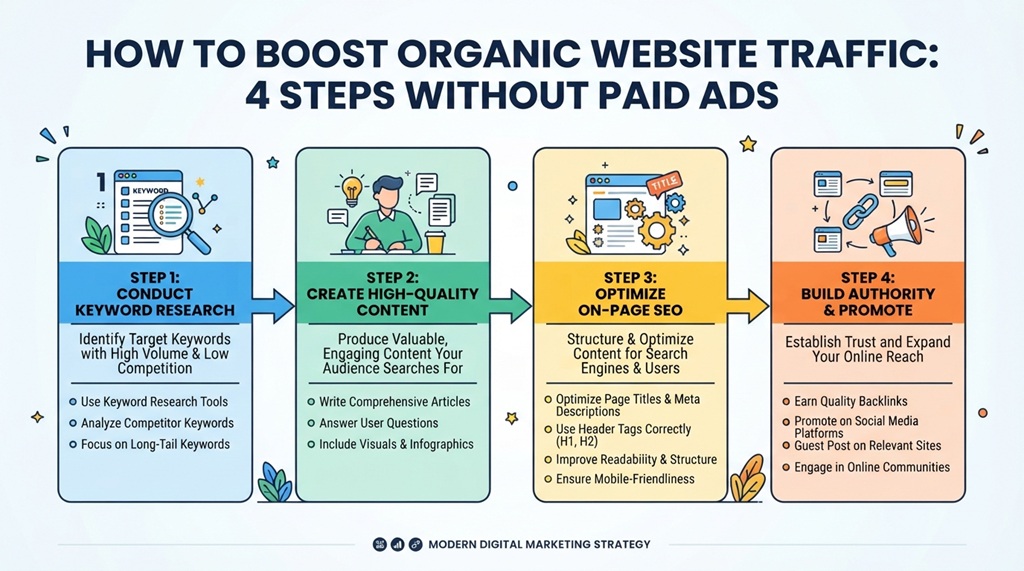
Most traffic guides stop at “build backlinks” and “post on social media.” Here’s an angle they skip: platforms like Quora, Stack Exchange, and niche-specific Q&A boards often outrank blog posts for long-tail, question-based searches.
Find questions in your niche that already rank on page one of Google. Write a genuinely thorough answer directly on that platform. Link to your site only where it adds real value, such as a deeper guide or a tool you built. These answers can rank for years and send a steady trickle of qualified traffic, since the platforms themselves already carry strong domain authority.
Master Performance Analytics to Uncover High-Leverage Growth Opportunities
You simply cannot scale organic reach without accurate measurement, and free platforms like Google Search Console and Google Analytics provide all the intelligence required to optimize your content ecosystem. Rather than constantly churning out new material, evaluate your performance monthly to identify pages earning high impression volumes but underperforming on click-through rates; these represent your highest-leverage quick wins, where a refined headline or compelling meta description can immediately capture untapped traffic. While mastering this organic SEO baseline establishes compounding, long-term sustainability, savvy brands strategically pair search optimization with targeted paid campaigns to accelerate market momentum—meaning if you are ready to drive rapid, immediate conversions, run social media Ads that deliver high ROI serves as the perfect high-impact complement to your content strategy.
Frequently Asked Questions
How long does it take to see results from organic traffic strategies?
Most sites start seeing meaningful movement after two to four months of consistent effort. Search engines need time to crawl, index, and evaluate new or updated content, so patience matters more than speed here.
Is organic traffic growth really possible without any budget?
Yes, though it costs time instead of money. Content creation, community engagement, and technical fixes all require effort, not cash, which makes this approach accessible to anyone willing to put in consistent work.
Do backlinks still matter for organic traffic in 2026?
Yes, backlinks remain a meaningful trust signal for search engines, though quality now matters far more than quantity. A handful of relevant, genuine links from respected sites in your niche outweighs dozens of low-quality ones.
What’s the biggest mistake people make when trying to grow organic traffic?
Publishing content inconsistently, then giving up too early. Search engines reward sites that show a steady, sustained pattern of useful content over many months, not a short burst followed by silence.
Should I focus on social media or SEO first?
Start with SEO-focused content, since it compounds over time and keeps working long after you publish it. Use social media and community platforms alongside it to speed up discovery, but treat search as your long-term foundation.
Conclusion
Boosting website traffic organically without spending money comes down to five things: answering real questions, fixing your technical foundation, building genuine community relationships, repurposing your best content, and tracking what actually works. None of these tactics require a budget. They require consistency.
Start with one or two tactics from this list. Master them before adding more. Organic growth builds slowly, but it lasts far longer than any paid traffic spike.

Leave a Reply